How to Use Potassium Monopersulfate Compound Effectively?
In today's world, effective chemical compounds are crucial for various applications. One such compound is Potassium Monopersulfate Compound. Known for its powerful oxidizing properties, it plays a vital role in water treatment, cleaning, and disinfection processes. It is essential to understand how to use this compound effectively to maximize its benefits.
Using Potassium Monopersulfate Compound requires attention to detail and safety. Proper dosages can lead to excellent results, but misuse can be counterproductive. For instance, improper mixing with other chemicals may diminish its effectiveness or even create hazards. Users must be mindful of specific conditions, such as pH levels, to ensure optimal performance.
Many individuals struggle with the proper application of this compound. They might overlook important guidelines or underestimate its strength. As a result, potential gains could be lost. Proper education and awareness can lead to more efficient usage. Embracing these details will encourage better results when working with Potassium Monopersulfate Compound.

Understanding Potassium Monopersulfate: Properties and Applications
Potassium monopersulfate is an effective oxidizing agent known for its versatility. This compound appears as a white crystal or granular powder. It’s stable and has a long shelf life, making it ideal for various applications. It acts as a powerful disinfectant, offering a strong option for water treatment. However, it’s not universally applicable for all types of pathogens.
In swimming pools, potassium monopersulfate serves as an alternative to traditional chlorine. It can break down organic contaminants quickly. The process tends to be safe and does not produce harmful chloramines. But its effectiveness hinges on maintaining proper pH levels. If the pH is off, its power diminishes, leaving potential issues unresolved.
In cleaning applications, this compound is often utilized for surfaces that require thorough disinfection. It is effective against bacteria and viruses. Yet, care is necessary to avoid overuse. Excessive amounts can lead to residue, affecting surface integrity. Users should ensure that they follow guidelines to achieve optimal results, avoiding trial and error. The importance of understanding its properties cannot be overstated for effective use.
How to Use Potassium Monopersulfate Compound Effectively? - Understanding Potassium Monopersulfate: Properties and Applications
| Property |
Value |
Application |
| Chemical Formula |
KHSO5 |
Used as an oxidizing agent |
| Appearance |
White crystalline powder |
Applied in water treatment |
| Solubility |
Soluble in water |
Effective in swimming pools |
| pH Range |
6.5 - 7.5 |
Used for maintaining pool water balance |
| Stability |
Stable when dry |
Suitable for storage and long-term use |
| Granule Size |
50-200 microns |
Ideal for controlled application |
Safety Precautions When Handling Potassium Monopersulfate
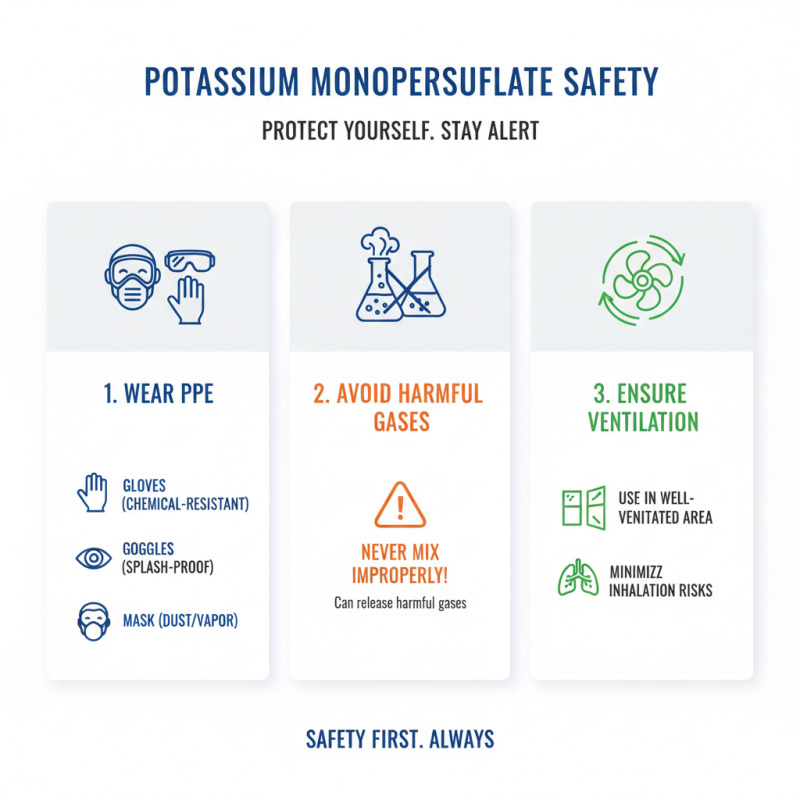
When working with potassium monopersulfate, safety should always come first. Wear appropriate personal protective equipment. This includes gloves, goggles, and a mask to avoid contact with skin and eyes. The compound can release harmful gases when mixed improperly. Ensuring proper ventilation is crucial. Using it in a well-ventilated area minimizes inhalation risks.
Store potassium monopersulfate in a cool, dry place. Avoid contact with moisture or incompatible substances. Containers should be tightly sealed. Accidental spills can be hazardous, so have a neutralizing agent on hand. Never underestimate its potential. While it can effectively clean, mishandling can lead to accidents. Regularly review safety data sheets. They provide essential information on safe handling procedures.
People often overlook safety when eager to use new products. A few small mistakes can lead to significant consequences. Always take a moment to reflect before starting. Maintaining a safety-first mindset is vital for effective use. Everyone must prioritize personal safety alongside performance goals.
Effective Methods for Applying Potassium Monopersulfate in Various Settings
Potassium monopersulfate is a versatile compound used in various applications. In swimming pools, it acts as a powerful oxidizer. According to a recent industry report, using potassium monopersulfate can help reduce chlorine levels by up to 80%. This reduction isn’t just practical; it enhances swimmer comfort.
In spa maintenance, its effectiveness is notable. Spa owners report clearer water and lower bacteria levels when using this compound regularly. Research shows that it can help to maintain pH levels effectively. Yet, it’s crucial to monitor the concentration. Using too much can lead to undesired chemical reactions.
In food processing, potassium monopersulfate is valued for its sterilization properties. Studies indicate it can eliminate up to 99% of common pathogens. However, improper application can lead to residues. This poses potential risks in food safety. Operators need to follow guidelines closely to avoid issues. Always prioritize clear instructions for best results.
Best Practices for Storing and Disposing of Potassium Monopersulfate
Storing potassium monopersulfate safely is crucial. Keep it in a cool, dry place. Avoid direct sunlight and moisture. Use airtight containers to prevent contamination. Ensure the storage area is well-ventilated. These small steps help maintain its effectiveness and safety.
Disposing of potassium monopersulfate requires caution. Mix it with plenty of water. This dilution helps reduce its potency. Never throw it into the regular trash. Always follow local regulations for hazardous waste disposal. Improper disposal can lead to environmental harm. Reflect on your practices often. Are they aligned with safety standards?
Potassium Monopersulfate Usage and Effectiveness
Common Mistakes to Avoid When Using Potassium Monopersulfate
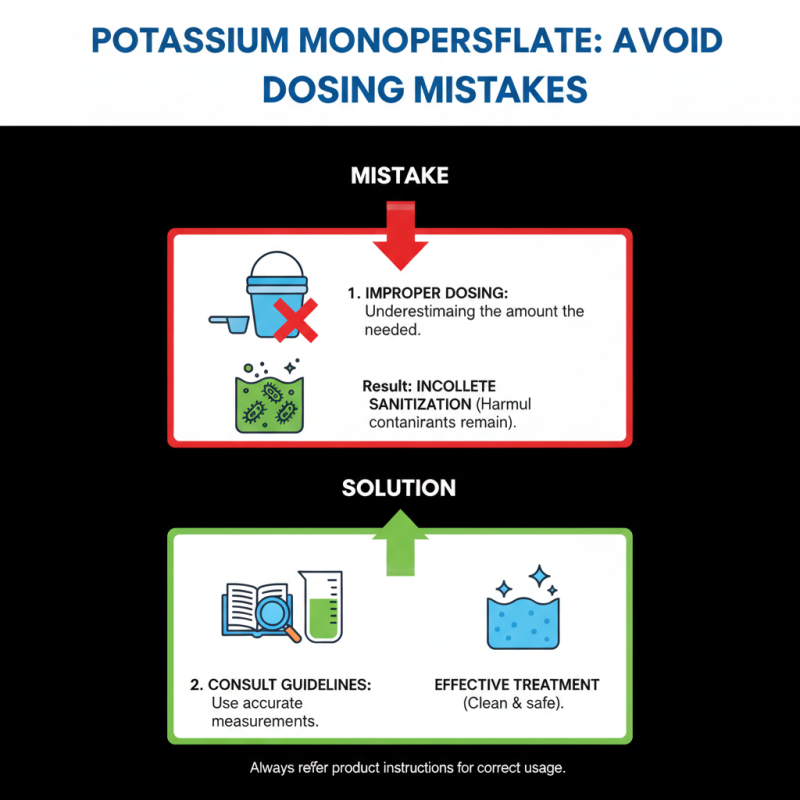
When using potassium monopersulfate, mistakes can lead to ineffective results. One common error is improper dosing. Users often underestimate the amount needed for effective treatment. This can result in incomplete sanitization, leaving harmful contaminants behind. It’s crucial to consult guidelines for accurate measurements to avoid this pitfall.
Another mistake is neglecting the pH levels of the water. Potassium monopersulfate works best within a specific pH range. If the pH is too high or low, the effectiveness diminishes. Testing the water regularly can help maintain optimal conditions. Many forget this step, thinking the compound will work regardless of the environment.
Inadequate mixing is another issue. Simply adding the compound to the water isn't enough. It must be evenly distributed for maximum efficacy. Users may rush this step, leading to uneven results. Taking time to ensure thorough mixing will enhance its performance significantly.