Top 10 Uses of Potassium Peroxymonosulfate in Industries?
Potassium Peroxymonosulfate is gaining attention in various industries due to its versatile applications. This powerful oxidizing agent is widely used for disinfecting water sources and enhancing cleaning processes. Its effectiveness in breaking down contaminants makes it a preferred choice in many sectors.
In the field of agriculture, Potassium Peroxymonosulfate plays a crucial role in soil treatment. Farmers utilize it to improve crop yield and prevent crop diseases. The compound's unique properties also make it useful in the food industry, where it helps ensure food safety through effective sanitization techniques.
However, while Potassium Peroxymonosulfate offers numerous benefits, its handling requires caution. Misuse can lead to undesirable reactions, emphasizing the need for proper training. As industries continue to explore its potential, understanding both its advantages and limitations will shape its future applications.

Applications of Potassium Peroxymonosulfate in Water Treatment Processes
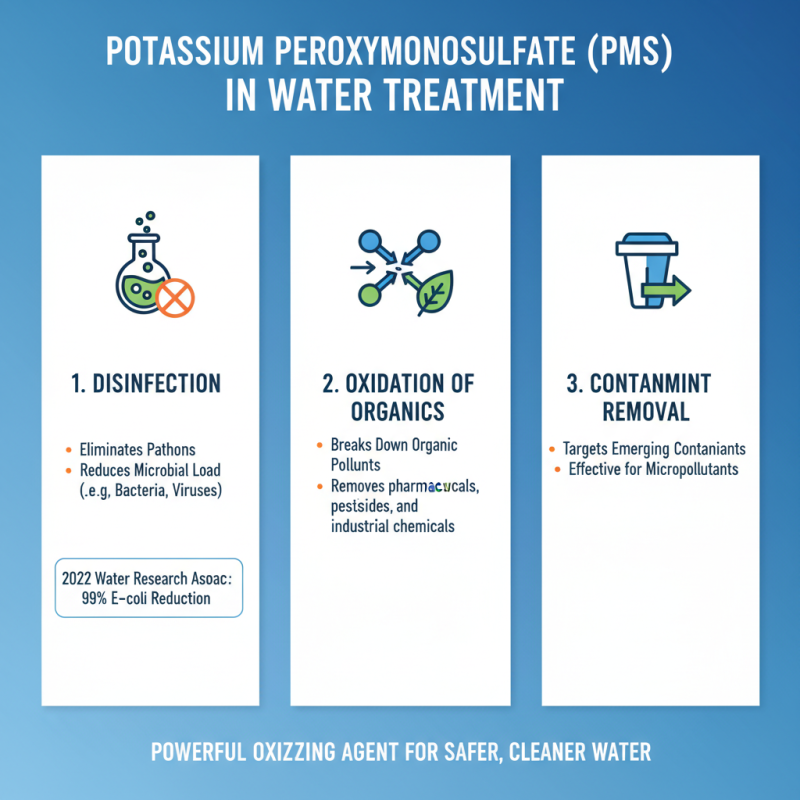
Potassium peroxymonosulfate (PMS) has emerged as a powerful oxidizing agent in water treatment. Its applications include disinfection, oxidation of organics, and removal of contaminants. Studies show PMS effectively reduces microbial populations, making water safer for consumption. For example, a 2022 report from the Water Research Association indicated a 99% reduction in E. coli in treated water using PMS.
The unique properties of PMS extend its use to various processes. In oxidation, it decomposes pollutants efficiently, thereby enhancing the overall quality of wastewater. According to the Environmental Protection Agency, PMS can break down complex organic molecules that traditional treatments struggle with. The effective dosage often varies, and factors such as pH and temperature can significantly influence outcomes.
Yet, challenges remain in its application. Over-reliance on PMS could lead to partial treatments if not monitored properly. This reflects the complexity of water chemistry, where varying conditions can alter efficacy. Continuous research is necessary to establish standardized protocols for its use in diverse scenarios. Balancing benefits with potential drawbacks ensures that PMS remains a reliable choice in water treatment practices.
Role of Potassium Peroxymonosulfate in Food Safety and Preservation
Potassium peroxymonosulfate (PMPS) plays a crucial role in food safety and preservation. Its strong oxidizing properties make it effective against a broad range of pathogens. Foodborne illnesses are a significant concern worldwide. PMPS helps in reducing the risk of contamination, ensuring safer consumption of food products.
In processing facilities, PMPS is often used as a sanitizer. It effectively disinfects surfaces and equipment, maintaining hygiene standards. However, its use requires careful monitoring. Over-application can lead to residue, affecting food quality. Additionally, not all products may respond well to PMPS treatment. Some natural food sources may retain its taste, while others may not.
Research indicates that PMPS can enhance the shelf life of food items. It hinders spoilage and extends freshness. Fresh produce treated with PMPS shows less microbial growth. Yet, the effectiveness can vary. The concentration and method of application are vital factors. As industries continue to explore its potential, the need for guidelines and best practices grows. Balancing efficacy and safety is essential in this application.
Utilization of Potassium Peroxymonosulfate in Textile and Dye Industry
Potassium peroxymonosulfate (PMS) has made significant strides in the textile and dye industry. This compound is renowned for its oxidative properties, making it a valuable agent in dyeing processes. According to a report from Smithers Pira, PMS can improve dye uptake and color depth, leading to vibrant textiles. It aids in the decolorization of textiles, which is crucial for reducing water pollution—an issue that affects many dyeing operations.
In addition, PMS is used for pretreatment of fabrics. The oxidizing properties help in removing impurities and enhancing fabric receptivity to dyes. A study by Technavio highlighted that the global textile dye market is expected to grow by over 3% annually. This growth creates a demand for effective and eco-friendly agents like PMS. However, while PMS offers advantages, its effectiveness can vary based on the fabric type and dye used, which reflects the need for ongoing research and optimization in its applications.
Moreover, while potassium peroxymonosulfate provides various benefits in dyeing, the potential for environmental impact needs careful consideration. The safety and handling of PMS are crucial. Awareness and proper training must be prioritized to mitigate risks. Despite its advantages, industry stakeholders must remain vigilant about potential downsides, ensuring practices remain sustainable and responsible.
Top 10 Uses of Potassium Peroxymonosulfate in Industries
| Use Case |
Industry |
Benefits |
Application Method |
| Water Treatment |
Environmental |
Disinfection and oxidation of contaminants |
Dosing in water systems |
| Bleaching Agent |
Textile |
Effective on natural and synthetic fibers |
Batch treatment process |
| Dye Fixative |
Textile |
Improves color fastness |
Add during dyeing process |
| Odor Removal |
Textile |
Neutralizes unpleasant smells |
Spray application |
| Stain Remover |
Textile |
Effectively removes organic stains |
Soaking and washing processes |
| Surfactant Booster |
Textile/Cleaning |
Enhances cleaning effectiveness |
Incorporated in detergent formulations |
| Inhibition of Microbial Growth |
Textile |
Prevents mold and bacteria issues |
Treatment solutions and coatings |
| Pre-treatment for Dyeing |
Textile |
Enhances dye uptake and uniformity |
Batch or continuous processes |
| Water Softening Agent |
Textile |
Reduces hardness in water |
Added during water preparation |
| Color Stabilizer |
Textile |
Prevents color fading and alteration |
Incorporated into dyes and finishes |
Impact of Potassium Peroxymonosulfate on Oil and Gas Production
Potassium peroxymonosulfate (PPS) plays a crucial role in the oil and gas industry. Its unique properties make it an effective oxidizing agent for various applications. For instance, it is utilized in the enhanced oil recovery process. This process aims to increase the extraction of oil from reservoirs. By breaking down the heaviest components in crude oil, PPS helps improve the flow of oil through porous rock formations.
In addition to enhancing recovery, potassium peroxymonosulfate is vital in treating produced water. This water often contains harmful substances. Using PPS can mitigate these contaminants, ensuring cleaner water disposal. However, the impact of its use can vary based on concentration and conditions. Thus, ongoing monitoring is essential to avoid potential environmental risks.
Moreover, the stability of potassium peroxymonosulfate can be a double-edged sword. While it is effective, any mishandling can lead to unintended reactions. Understanding its behavior in different environments requires expertise and careful planning. Balancing benefits and risks is key to leveraging potassium peroxymonosulfate efficiently in oil and gas production.
Use of Potassium Peroxymonosulfate in the Pharmaceutical Manufacturing Sector
Potassium peroxymonosulfate is gaining attention in the pharmaceutical manufacturing sector. It serves as a powerful oxidizing agent. This compound effectively eliminates contaminants in drug production. Its strong oxidative properties help ensure drug purity and safety.
In the production of active pharmaceutical ingredients (APIs), potassium peroxymonosulfate plays a crucial role. It assists in the oxidation of various substances. This process helps in the synthesis of complex molecules. Its ability to break down impurities is vital for compliance with strict regulations. Reliable sterilization methods are essential in pharmaceuticals. However, the use of this compound requires careful handling. The concentration and application must be monitored closely.
While potassium peroxymonosulfate is effective, challenges remain. Over-oxidation can alter the desired outcomes. Manufacturers must experiment to optimize its use. Continuous research is necessary to fully understand its potential. The need for safe and effective oxidizing agents continues to grow. Therefore, the pharmaceutical industry must remain vigilant.
Top 10 Uses of Potassium Peroxymonosulfate in Industries