Top 10 Livestock Disinfectants for Optimal Farm Hygiene?
In the realm of animal husbandry, maintaining high standards of cleanliness is crucial. Livestock disinfectants play a vital role in preventing disease outbreaks and ensuring the well-being of animals. A study by the American Veterinary Medical Association highlights that effective disinfectants can reduce pathogen load by over 99% when used correctly. This is essential, as livestock diseases can result in significant economic losses.
Farm hygiene impacts not just animal health but also food safety. According to the Centers for Disease Control and Prevention, zoonotic diseases transmitted from livestock to humans have increased by 75% in the past few decades. This alarming trend emphasizes the need for reliable livestock disinfectant solutions that can safeguard both animals and humans.
However, not all disinfectants are created equal. Farmers must choose products that are proven effective and suited for specific pathogens. Case studies have shown that improper use of disinfectants can lead to resistance, making it imperative to educate farm personnel. Investing in knowledge and appropriate products is not just recommended; it is necessary for optimal farm hygiene and health safety.
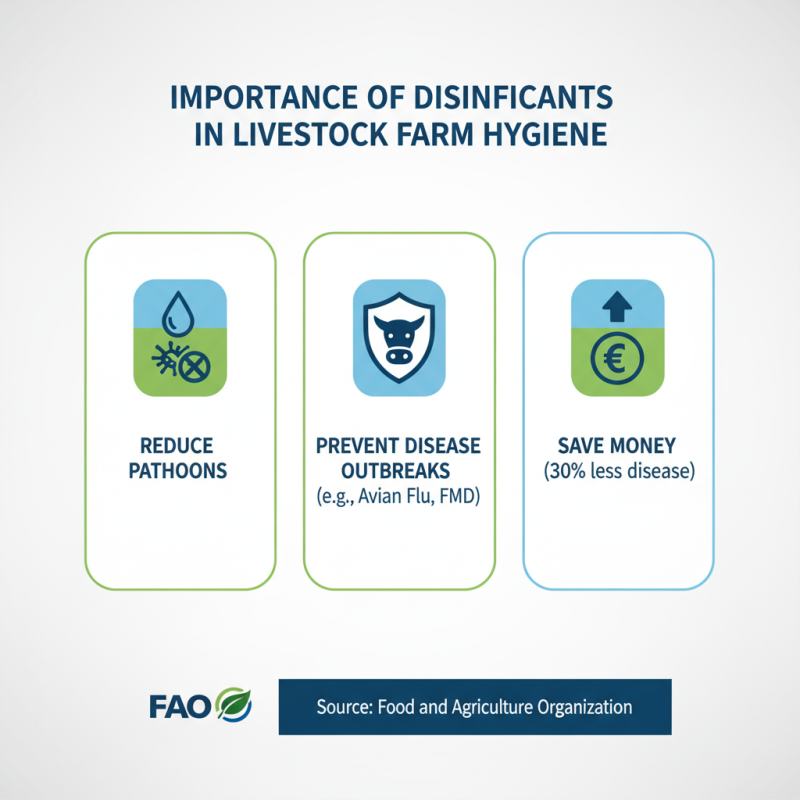
Importance of Disinfectants in Livestock Farm Hygiene
Maintaining optimal hygiene on livestock farms is essential. Disinfectants play a critical role in achieving this goal. Effective disinfectants reduce pathogen loads, preventing outbreaks of diseases such as avian influenza and foot-and-mouth disease, which can cause significant economic losses. According to a report from the Food and Agriculture Organization (FAO), farms that implement robust disinfecting protocols see a 30% decrease in disease incidence.
The importance of using the right disinfectant cannot be understated. A systematic review indicated that a large percentage of livestock farms report inadequate cleaning practices. In many cases, the chosen disinfectants do not target specific pathogens effectively. The risk of antibiotic resistance also looms large as farmers sometimes rely on antibiotics rather than proper sanitation. The industry needs to address these gaps.
Regular training for farm staff can significantly enhance hygiene practices. Key areas to focus on include understanding the types of disinfectants and their application methods. A recent study found that 70% of farm workers were unaware of the correct usage of disinfectants. This knowledge gap can lead to ineffective cleaning protocols that compromise farm health. Investing in education could lead to better outcomes for livestock well-being.
Criteria for Selecting Effective Livestock Disinfectants
Selecting an effective livestock disinfectant is crucial for farm hygiene. When evaluating disinfectants, it’s essential to consider several criteria, including efficacy, safety, and contact time. Studies reveal that disinfectants must inactivate a wide range of pathogens, including bacteria, viruses, and fungi. Reports indicate that about 70% of farm-related diseases are caused by biofilm organisms. Thus, a disinfectant should penetrate biofilms to ensure thorough sanitation.
Another important factor is the safety of the product for both animals and humans. Disinfectants can contain harmful chemicals, which may pose risks if mismanaged. It's recommended to choose products that have undergone rigorous safety testing. Research has shown that using proper dosage can reduce harm by up to 50%. Additionally, products with low toxicity are preferred in livestock environments to minimize health risks.
Lastly, consider the ease of use. Disinfectants should be compatible with existing farm equipment and practices. Ideally, they should require minimal preparation and quick application processes. Industry insight indicates that over 40% of farmers face challenges with product application due to complexity. Recognizing these factors can help in selecting the best disinfectant and improving farm hygiene effectively.
Top 10 Disinfectants: Overview and Active Ingredients
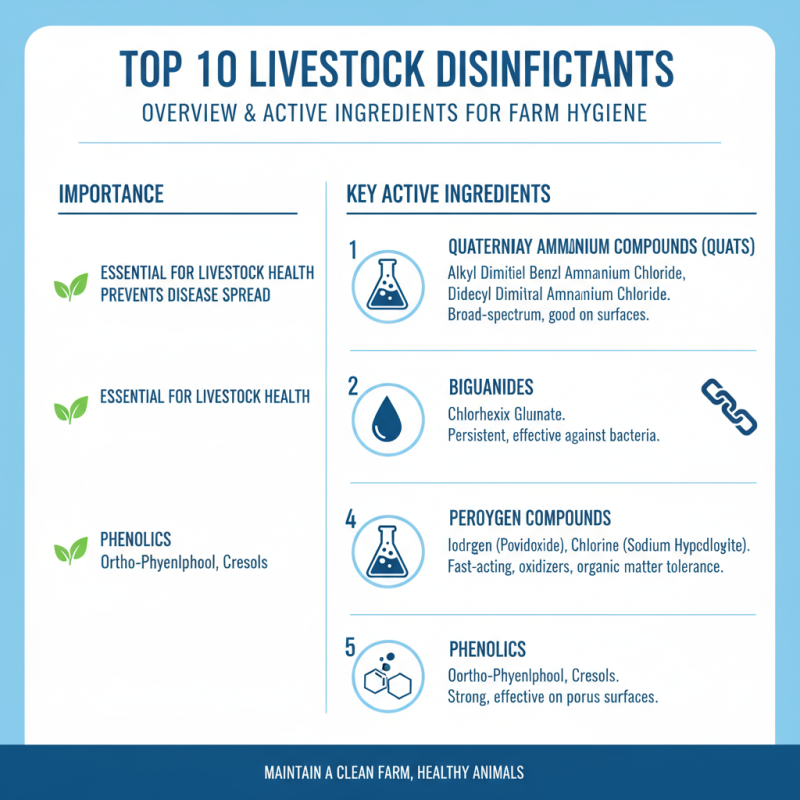
Maintaining farm hygiene is essential for livestock health. Effective disinfectants play a crucial role in this process. In this article, we will explore the active ingredients commonly found in top livestock disinfectants and their importance.
One key ingredient often used is sodium hypochlorite. This compound effectively eliminates bacteria, viruses, and fungi. Its strong oxidative properties help to ensure thorough sanitation. Another commonly included ingredient is quaternary ammonium compounds. Known for their lasting effects, they provide residual action against pathogens. They are particularly effective in wet conditions.
Moreover, hydrogen peroxide is becoming popular for its rapid action. It decomposes into harmless substances, making it safe for the environment. However, high concentrations can be hazardous. Attention must be paid to dilution and application methods. Some users may overlook proper safety protocols, leading to potential health risks. Understanding these ingredients helps farmers make informed choices for their livestock's health.
Application Techniques for Optimal Disinfectant Effectiveness
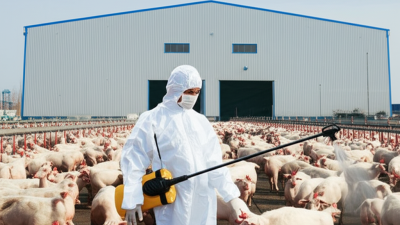
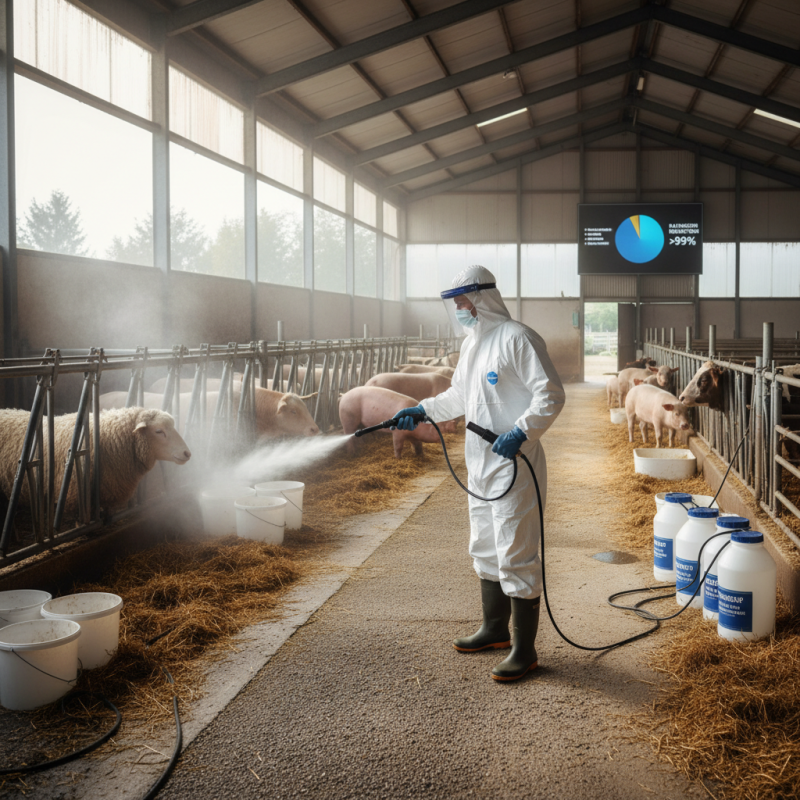
Disinfecting livestock facilities is crucial for maintaining optimal farm hygiene. Effective application techniques can significantly enhance the efficacy of disinfectants. First, thorough cleaning must precede disinfection. This step removes organic matter, making the disinfectant more effective. Use power washers to eliminate dirt and debris. Ensure all surfaces are visible and accessible.
When applying disinfectants, focus on even coverage. A spray nozzle provides greater control and ensures that all areas receive adequate exposure. Pay attention to high-touch surfaces, such as doors and feeders. These spots harbor the most pathogens. Consider the dwell time, too; allow the disinfectant to sit for the recommended period before rinsing. This ensures that harmful organisms are adequately killed.
Precision in application is vital, yet it often gets overlooked. Farmers may rush the process, thinking any application will suffice. Mistakes can lead to inadequate disinfection. Regular training on techniques can improve results. For example, incorporating feedback loops, where workers discuss application challenges, can build a culture of awareness. Remember, maintaining farm hygiene is an ongoing effort, not a one-time task. Engaging workers in the process creates accountability and enhances overall hygiene standards.
Top 10 Livestock Disinfectants for Optimal Farm Hygiene
| No. |
Disinfectant |
Active Ingredient |
Application Method |
Dilution Rate |
Contact Time |
| 1 |
Quaternary Ammonium Compound |
Benzalkonium Chloride |
Spray |
1:250 |
5 minutes |
| 2 |
Hydrogen Peroxide |
Hydrogen Peroxide |
Wipe or Spray |
1:10 |
10 minutes |
| 3 |
Sodium Hypochlorite |
Chlorine |
Spray |
1:100 |
15 minutes |
| 4 |
Iodophors |
Povidone-Iodine |
Wipe or Spray |
1:100 |
10 minutes |
| 5 |
Peracetic Acid |
Acetic Acid |
Fogging |
1:20 |
30 minutes |
| 6 |
Formaldehyde |
Formalin |
Fogging |
1:50 |
60 minutes |
| 7 |
Chlorine Dioxide |
Chlorine Dioxide |
Fogging |
1:100 |
20 minutes |
| 8 |
Citric Acid |
Citric Acid |
Spray |
1:200 |
5 minutes |
| 9 |
Virkon S |
Potassium Peroxymonosulfate |
Spray or soak |
1:100 |
10 minutes |
| 10 |
Biosafety Solutions |
Natural Enzymes |
Wipe or Spray |
1:50 |
15 minutes |
Safety Considerations and Environmental Impact of Disinfectants
Disinfectants are essential for maintaining farm hygiene, but their safety and environmental impact warrant careful consideration. Many disinfectants contain chemicals that can pose risks to both livestock and humans. According to recent studies, improper use of disinfectants can lead to health issues in animals, including respiratory distress and skin irritations. Furthermore, exposure to certain compounds can affect farm workers, jeopardizing their health over time.
Environmental implications are equally concerning. Research indicates that runoff from farms can carry disinfectant residues into local water sources, threatening aquatic life. A 2021 report highlighted the fact that 30% of disinfectant pollutants in waterways stem from agricultural practices. Sustainable practices are imperative to mitigate these risks. Selecting biodegradable disinfectants and adhering to proper application guidelines can minimize environmental harm.
Moreover, the efficacy of disinfectants can sometimes lead to complacency. Farmers may rely heavily on harsh chemicals instead of adopting integrated farm management practices. This can result in antimicrobial resistance, making infections harder to treat in both animals and humans. Regular training and a commitment to updating hygiene protocols are essential for ensuring that farm practices remain safe and effective while safeguarding environmental health.