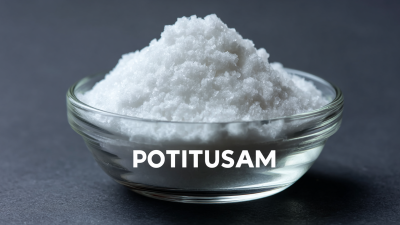
What is Potassium Bisulfate Salt Compound and Its Benefits?
Potassium Bisulfate Salt Compound is a versatile substance with numerous applications. It is commonly used in different industries, including agriculture, food processing, and chemistry. This compound holds significant importance due to its unique properties.
In agriculture, Potassium Bisulfate serves as an effective fertilizer. It provides essential nutrients for plant growth, promoting strong and healthy crops. Its use can enhance crop yield, a vital aspect for growing populations. In food processing, this compound acts as an acidulant. It helps improve flavor and preserves food quality, making it crucial for food manufacturers.
However, one must consider the balance of using Potassium Bisulfate. Overuse can lead to soil acidity issues. This necessitates careful application and monitoring. Understanding the compound's benefits and limitations is essential for sustainability in both agriculture and food industries. Caution should guide its use to maximize positive outcomes while minimizing potential harm.

What is Potassium Bisulfate Salt Compound?
Potassium bisulfate is a chemical compound with the formula KHSO4. It appears as a white crystalline salt. This compound is soluble in water, which allows it to interact easily with other substances. Its acidic properties make it useful in various applications.
In agriculture, potassium bisulfate acts as a source of potassium and sulfur. Plants benefit from both these nutrients. Potassium supports overall plant health, while sulfur promotes better protein synthesis. This results in enhanced crop yield and quality. However, using it requires careful consideration. Too much can harm soil health.
Beyond agriculture, potassium bisulfate serves in various industrial processes. It is used in cleaning products and as a food preservative. However, not all applications are effective or sustainable. It's essential to monitor and evaluate the effects continually. Regular assessments can prevent unwanted consequences. Moreover, responsible usage ensures that benefits are maximized, while risks are minimized.
Chemical Composition and Properties of Potassium Bisulfate
Potassium bisulfate, also known as potassium hydrogen sulfate, is a versatile chemical compound. Its molecular formula is KHSO4. This compound appears as a white crystalline powder with a mildly acidic taste. It is soluble in water, making it easy to incorporate into various applications. According to a study, its high solubility allows for efficient use in fertilizers and chemical processes.
The compound consists of potassium ions, bisulfate ions, and sulfate ions. With a pH value around 1.5 to 2.5 in solution, it exhibits strong acidity. This property makes it beneficial in applications requiring pH control. A report from the American Chemical Society noted its effectiveness as a buffering agent in many chemical reactions. In agriculture, potassium bisulfate serves as a source of potassium, essential for plant growth. It helps in enhancing crop yield and improving soil quality, providing vital nutrients.
Research indicates that it can benefit several industries, including food processing and pharmaceuticals. While potassium bisulfate has many benefits, overuse may lead to soil acidity issues. Producers must balance its application to avoid negative environmental impacts. Data from soil management studies emphasize the importance of proper dosage. This ensures both crop productivity and sustainability. Balancing benefits and risks is essential for its effective use in various sectors.
Benefits of Potassium Bisulfate
Common Uses and Applications of Potassium Bisulfate
Potassium bisulfate is a versatile salt compound with various applications. In agriculture, it serves as a fertilizer, providing essential potassium to plants. Farmers use it to improve crop yields. The compound enhances nutrient absorption, allowing plants to grow stronger and healthier.
In the food industry, potassium bisulfate serves as a food preservative. It inhibits microbial growth, extending shelf life, which is crucial for many processed foods. Additionally, it acts as an acidulant, giving a subtle tang to certain products. The balance it provides can be vital for flavor profiles. There is a fine line between enhancing taste and overpowering it.
Potassium bisulfate is also used in laboratories and water treatment. In labs, it assists in pH adjustments and chemical reactions, but it can sometimes lead to unexpected results, making careful measurement essential. In water treatment, it helps in controlling acidity; however, too much can harm aquatic life, a factor to consider. Its multifaceted uses highlight its importance, but caution is necessary.
Safety and Handling Precautions for Potassium Bisulfate
Potassium bisulfate is a useful compound with diverse applications. However, safety is crucial when handling it. This compound can irritate the skin, eyes, and respiratory tract. Always wear gloves and safety goggles when working with potassium bisulfate. Do not inhale the dust or fumes that may arise during its use.
For those working in labs or industrial settings, ensure proper ventilation. A fume hood is ideal. While it’s beneficial for pH adjustment and as a fertilizer, improper handling can lead to exposure risks. Having an emergency plan is vital in case of accidental spills or contact.
Tips: Store potassium bisulfate in a cool, dry place. Secure the container tightly when not in use. In case of skin contact, wash with soap and water immediately. If it gets into the eyes, rinse for at least 15 minutes. Always consult the Safety Data Sheet for specific safety instructions. Stay aware and cautious; it’s better to prevent accidents than to deal with their consequences.