Choosing the Best Veterinary Disinfectant for Your Practice?
Choosing the right Veterinary Disinfectant is crucial for any practice. The health of both animals and staff relies on effective sanitation. A reliable disinfectant can help mitigate disease transmission in veterinary clinics.
When selecting a disinfectant, consider factors like efficacy, safety, and surface compatibility. Not all disinfectants are equal. Some may be effective against specific pathogens, while others might not be suitable for certain materials. Animal environments can be complex and varied, posing unique challenges.
Veterinary professionals must be informed about the products they use. Trustworthy sources and updated research are vital. Some might overlook the importance of training staff on proper application techniques. This can lead to missed opportunities in maintaining a clean and safe environment. Reflecting on these aspects can enhance not only hygiene standards but also overall care.
Understanding Veterinary Disinfectants: Importance and Necessity
In veterinary practices, disinfectants play a vital role in maintaining a clean and safe environment. Ensuring that all surfaces and tools are free from harmful pathogens is crucial. This helps prevent disease transmission among animals and staff. A thorough understanding of the types of disinfectants available can significantly impact a practice's health standards.
Selecting the right disinfectant often involves considering its effectiveness against a range of pathogens. Some disinfectants may excel against viruses but fall short with bacteria or fungi. It's essential to be aware of the specific needs of your practice. Moreover, some may have lingering smells or toxic residues, which can pose additional challenges.
Education on disinfectant application is often overlooked. Staff training is fundamental. Improper use can lead to ineffective cleaning or even health risks. Reflection on past protocols may reveal gaps in knowledge or execution. Sharing insights within the team can foster an environment of continuous improvement. The goal is always to ensure the safety of both animals and humans in veterinary care.
Choosing the Best Veterinary Disinfectant for Your Practice
| Disinfectant Type |
Active Ingredients |
Effectiveness |
Surface Compatibility |
Safety Rating |
| Quaternary Ammonium Compounds |
Benzalkonium Chloride |
Effective against Gram-positive bacteria |
Plastic, Stainless Steel |
Low |
| Phenolic Compounds |
Orthophenylphenol |
Broad spectrum, effective on viruses |
Hard surfaces, Ceramic |
Medium |
| Hypochlorites |
Sodium Hypochlorite |
Highly effective against bacteria and viruses |
Bleachable surfaces only |
High |
| Iodophors |
Povidone-Iodine |
Effective against bacteria, fungi, and viruses |
Most surfaces, avoid prolonged contact with metals |
Medium |
| Peracetic Acid |
Peracetic Acid |
Effective against bacteria, spores, and viruses |
Metal, Plastic surfaces |
High |
Key Ingredients to Look for in Veterinary Disinfectants
When selecting a veterinary disinfectant, understanding key ingredients is essential. Effective disinfectants often include quaternary ammonium compounds, commonly known as quats. These compounds are effective against bacteria and enveloped viruses. A study in the "Journal of Veterinary Medicine" highlighted that quats can reduce microbial load by over 90% in a typical veterinary setting.
Another crucial ingredient is hydrogen peroxide. This powerful oxidizer not only kills bacteria but is also effective against spores. Research indicates that hydrogen peroxide can eliminate harmful pathogens like Parvovirus, a common concern in veterinary practices. However, its efficacy can be influenced by environmental factors like temperature and organic matter.
In recent reports, over 60% of veterinary practices faced challenges in choosing effective disinfectants that meet safety standards. Reflecting on this data reveals a gap in knowledge and practice. Proper training on disinfectant use and understanding ingredient interactions is often overlooked. Many professionals might not realize that combining disinfectants can reduce their effectiveness. This highlights the need for ongoing education in veterinary hygiene. Emphasizing ingredient knowledge not only enhances practice safety but also supports animal health and welfare.
Comparative Analysis of Disinfectant Types for Veterinary Use
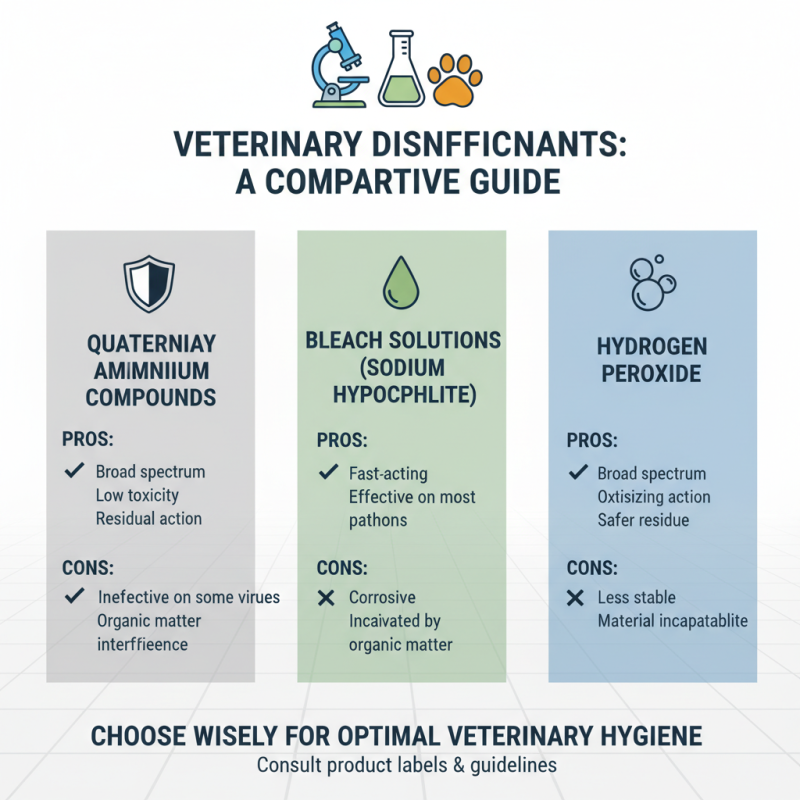
In veterinary practices, choosing the right disinfectant is crucial. Various types of disinfectants serve different purposes and have unique effectiveness. Common categories include quaternary ammonium compounds, bleach solutions, and hydrogen peroxide. Each type has its pros and cons regarding efficacy, safety, and residue.
When selecting a disinfectant, consider the specific pathogens you face. Some disinfectants are weak against certain viruses or bacteria. Be aware that some residues may irritate animal skin. Additionally, read labels carefully. Over-concentration can lead to toxicity, while under-concentration might fail to disinfect effectively.
Tips: Ensure staff are trained on proper dilution techniques. Regularly review your disinfectant's efficacy against local pathogens. Keep track of any adverse reactions noted in animals. Be mindful that not all surfaces react the same way to different disinfectants. Engage with your local vet community to share experiences and insights on effective practices.
Assessing the Effectiveness of Disinfectants in Practice Settings
Choosing the right disinfectant is crucial in veterinary practice. Not all disinfectants are created equal. Various studies report that factors like contact time and pathogen type significantly impact efficacy. A report from the American Animal Hospital Association suggests that 30% of practices do not regularly evaluate their disinfectants. This could lead to potential outbreaks of zoonotic diseases.
In practice settings, thorough testing is essential. For example, using a disinfectant effective against parvovirus is vital in canine clinics. Research shows that only 50% of commonly used products effectively kill parvovirus within the recommended contact time. Regular assessments ensure that the chosen products provide adequate protection against harmful pathogens. Educating staff on proper application techniques is equally important, as misuse diminishes effectiveness.
Evaluating disinfectants should not be a one-time task. Recommendations from veterinary microbiology experts emphasize that practices should reassess their disinfectants at least yearly. This can help avoid complacency. Maintaining a high standard of hygiene is non-negotiable. Regular audits and staff training on current best practices can bridge the gap. Disinfecting effectively is not just about choosing a product; it’s about understanding its application in real-world settings.
Guidelines for Proper Application and Safety Measures in Disinfection
Choosing the right veterinary disinfectant is crucial for maintaining a safe environment. The application process requires careful attention. Always read the instructions provided. Different formulations have specific contact times. This is essential for effective disinfection. Some products may need to be diluted correctly. Mistakes in this area can lead to ineffective results.
Safety measures should never be overlooked. Personal protective equipment is vital when applying disinfectants. Gloves, masks, and eye protection help reduce exposure risks. Ideally, work in well-ventilated areas. Fumes can be harmful, and prolonged exposure should be avoided. Regular training on proper techniques is important. This helps staff understand risks associated with various chemicals.
Monitoring the effectiveness of disinfection practices can be challenging. Surfaces may not always appear visibly clean. Routine checks and feedback from your team can identify areas for improvement. Keeping records of application procedures can also help. Reflecting on current practices encourages better, safer outcomes. Disinfection is not just a task—it's a commitment to health.