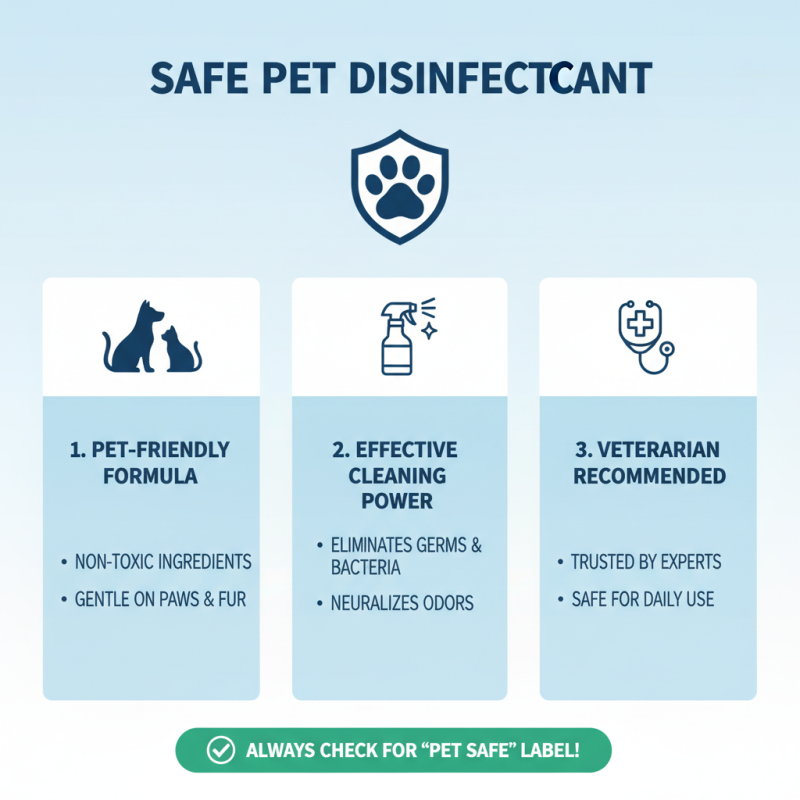
How to Choose the Best Pet Disinfectant for Your Home?
Choosing the right pet disinfectant for your home can feel overwhelming. With so many options available, how do you decide? Dr. Emily Carter, a pet hygiene expert, once said, “Not all disinfectants are safe for pets. You need to be cautious.”
In homes with pets, cleanliness is crucial. Disinfectants should effectively eliminate germs while being safe for your furry friends. Some products can be toxic if ingested or inhaled. Reading labels is vital. Many pet owners overlook this step, leading to unintended harm.
Consider the ingredients in your disinfectant. Avoid harsh chemicals whenever possible. Natural options exist that can be just as effective. Think about ease of use too. An easy-to-apply disinfectant will encourage regular cleaning. Keeping your space safe and sanitary for your pets will help ensure their health and happiness.
Understanding the Importance of Pet Disinfectants for Home Hygiene
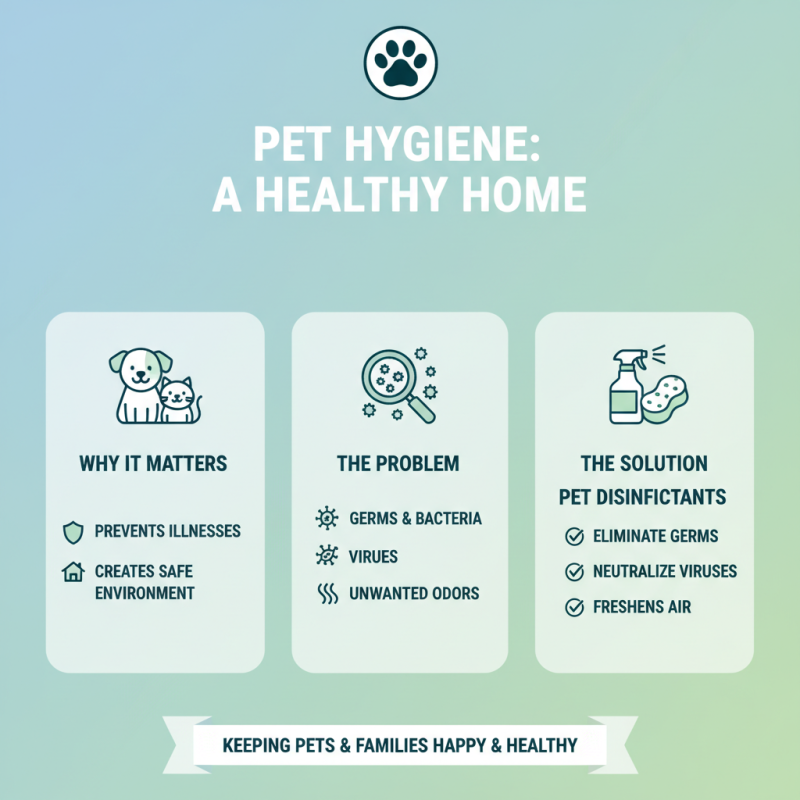
Every pet owner knows hygiene is crucial. Pets bring joy, but they also carry germs. Regular cleaning helps prevent illnesses. Pet disinfectants are essential for maintaining a safe environment. They eliminate bacteria, viruses, and odors effectively.
Understanding how disinfectants work is vital. Some focus on specific pathogens, while others are broad-spectrum. It’s important to read labels and know what you're using. Consider the surfaces you clean. Some disinfectants might damage certain materials. Test a small area first. This simple step can prevent problems later.
Choosing the right product isn't easy. Many options look similar. You may wonder about safety for pets and humans. Always check for non-toxic ingredients. Reflect on your cleaning habits, too. Are you skipping hard-to-reach areas? A deeper clean might be necessary. Aim for a routine that covers all surfaces. This can enhance your pet’s health and your home’s hygiene.
Identifying Common Pet-Related Contaminants in the Household
When you share your home with pets, certain contaminants can become common. Pet fur and dander accumulate on surfaces. Urine and feces can create hidden hazards. Bacteria and parasites thrive in these environments. Identifying these contaminants is key to a clean home.
Tips: Focus on high-traffic areas. Vacuum often. This helps reduce hair and dander. Don't forget to clean under furniture. It's easy to overlook these spots.
Another issue is odors. Pets can create lingering smells. These can come from bedding, carpets, or toys. Regular washing is necessary. Use hot water for fabrics. Check for stains that might need extra attention. A damp cloth can help with smaller messes.
Tips: Use an enzyme-based cleaner for urine stains. This helps break down the materials effectively. Pay attention to every corner. Sometimes, we miss spots that need extra cleaning. It's a good practice to routinely inspect the house.
How to Choose the Best Pet Disinfectant for Your Home? - Identifying Common Pet-Related Contaminants in the Household
| Contaminant |
Source |
Health Risk |
Recommended Disinfectant Type |
| Feces |
Dog/Cat waste |
Bacterial infections, parasites |
Enzymatic cleaners |
| Urine |
Dog/Cat urine |
Ammonia exposure, odors |
Neutralizing agents |
| Hair |
Shedding |
Allergies, respiratory issues |
Lint rollers, general cleaners |
| Saliva |
Licking |
Bacterial growth |
Antimicrobial sprays |
| Parasites |
Fleas, ticks |
Itchy skin, infections |
Pest control disinfectants |
Evaluating Different Types of Disinfectants Safe for Pets
Choosing a pet-safe disinfectant can be challenging. Many products contain harsh chemicals that are harmful to animals. According to a recent study, nearly 20% of pet owners reported their pets experiencing adverse reactions from common disinfectants. This statistic highlights the importance of selecting products that effectively kill germs while ensuring the safety of furry family members.
When evaluating disinfectants, consider their active ingredients. Some disinfectants contain plant-derived components that are less toxic. An analysis by the Environmental Protection Agency suggests that disinfectants labeled as "non-toxic" or "pet-safe" are preferable. Always check for the absence of substances like phenols and certain alcohols. These can irritate your pet's skin and respiratory system.
Beyond ingredients, consider how you use these disinfectants. Many people spray surfaces without proper ventilation. This can increase the risk of exposure for pets. The Humane Society recommends letting areas dry thoroughly before allowing pets back inside. Also, remember to test any new product on a small area first. What works for one home may not be suitable for another. Each pet reacts differently, and it’s important to stay observant.
Best Practices for Using and Storing Pet Disinfectants at Home
When it comes to using pet disinfectants, following best practices is essential for the safety of your pets and your home. Always read the label carefully. Some products may contain harsh chemicals. If you're concerned about the ingredients, consider looking for those marked as pet-safe. This small step can make a significant difference.
Storing your disinfectants properly is crucial. Keep them out of reach of pets and children. A high shelf or a locked cabinet works well. Always use secure containers. Spills can happen; a tight lid can prevent accidents. If using disinfectants in high-traffic areas, ensure the area is well-ventilated. Some products can produce strong odors that linger.
Tips: Avoid mixing different cleaning agents. This can create toxic fumes. Test new disinfectants on a small area first. Some surfaces may discolor or be damaged. Lastly, ensure that any item, like toys or bedding, is thoroughly rinsed after cleaning. Pets are curious and may lick these surfaces. Keeping them safe keeps their environment healthy.