How to Choose the Best Disinfectant Products for 2026?
Choosing the best disinfectant products for 2026 involves careful consideration. The landscape of cleaning solutions is evolving rapidly. New challenges arise each year, and consumers must stay informed.
Today, disinfectant products come in many forms, from sprays to wipes. Effectiveness is key, but so is safety. Some products contain harsh chemicals that can harm surfaces or irritate skin. It’s important to read labels and understand ingredients.
Finding the right balance is tricky. What works well in a commercial setting may not be suitable for home use. Many people need products that tackle germs without causing damage. As we move into 2026, it’s clear that research and reflection on cleaning habits will guide our choices. Making informed decisions will lead to a healthier environment.
Understanding Disinfectant Categories and Their Uses
When selecting disinfectant products, it's essential to understand their categories. There are three main types: disinfectants, sanitizers, and antiseptics. Each serves a unique purpose. Disinfectants are effective on hard surfaces. They reduce germs significantly. Sanitizers offer a lighter touch. They can lower bacteria levels but may not eliminate all viruses. Meanwhile, antiseptics are more suited for skin use.
Knowing how to use these products properly is key. For instance, disinfectants often require contact time to be effective. This means the surface must stay wet for a specified duration. It's easy to overlook this detail. Also, according to some studies, improper use can lead to resistance in germs.
While browsing options, consider the ingredients. Fragrances or added surfactants can affect effectiveness. A product that smells pleasant might not be as potent. Opt for ones with clear instructions. Check for certifications that validate their claims. Sometimes, simplicity is best. Overly complex formulas may sound appealing but can be misleading. Always question what you choose. Don’t get lost in marketing, and remember to read the labels carefully.
How to Choose the Best Disinfectant Products for 2026? - Understanding Disinfectant Categories and Their Uses
| Category |
Active Ingredients |
Use Cases |
Effectiveness Against |
Application Method |
| Quaternary Ammonium Compounds (Quats) |
Benzalkonium Chloride |
Disinfecting surfaces in households |
Bacteria, some viruses |
Wipe or spray |
| Bleach (Sodium Hypochlorite) |
Sodium Hypochlorite |
Hard surfaces, bathrooms, and kitchens |
Bacteria, viruses, mold |
Dilute and spray |
| Alcohol |
Isopropyl Alcohol, Ethanol |
Skin antiseptics, surface disinfection |
Bacteria, many viruses |
Wipe or spray |
| Hydrogen Peroxide |
Hydrogen Peroxide |
Surface sanitation, mold removal |
Bacteria, viruses, fungi |
Spray |
| Natural Disinfectants |
Vinegar, Tea Tree Oil |
Homes, food surfaces |
Some bacteria, mild fungi |
Spray or wipe |
Key Ingredients to Look for in Effective Disinfectants
Choosing the right disinfectant products can feel overwhelming. Key ingredients play a crucial role in ensuring effectiveness. Look for disinfectants that contain at least 70% alcohol. This concentration is essential for killing germs effectively. Alcohol-based products evaporate quickly, leaving no residue behind.
Another important ingredient is hydrogen peroxide. It's a powerful disinfectant that can kill a variety of pathogens. Products with hydrogen peroxide often come in various formulations. This makes them versatile for different surfaces. However, be cautious with its use on colored fabrics, as it can cause fading.
Quaternary ammonium compounds, or quats, are also common. They are effective against bacteria, viruses, and fungi. Yet, they can sometimes leave a sticky residue. This can be frustrating if surfaces need to remain clean and safe.
When selecting a disinfectant, consider your specific needs and the environment. Not all disinfectants suit every setting. Experimenting with different products may be required to find the right balance between effectiveness and usability.
Evaluating Safety and Environmental Impact of Disinfectants
When choosing disinfectant products for 2026, safety and environmental impact are crucial. Many products contain harmful chemicals. These can pose risks to health and ecosystems. Safety data sheets often list ingredients, but understanding them is vital. Some common disinfectants may cause irritation or allergic reactions. Opting for safer alternatives can reduce these risks.
Environmental impact is another important factor. Many disinfectants can harm aquatic life if released into water systems. Biodegradable options are available and preferable. They break down more quickly and do less damage. However, some biodegradable products may still contain chemicals that require scrutiny. Not all formulations are created equal.
It's essential to consider packaging as well. Excessive plastic use is a growing concern. Brands are increasingly using eco-friendly packaging, but progress is slow. Staying informed about the latest developments can help consumers make better choices. Reflection on past purchases can also guide future selections.
Disinfectant Products Environmental Impact (2026)
Guidelines for Proper Usage and Application of Disinfectants
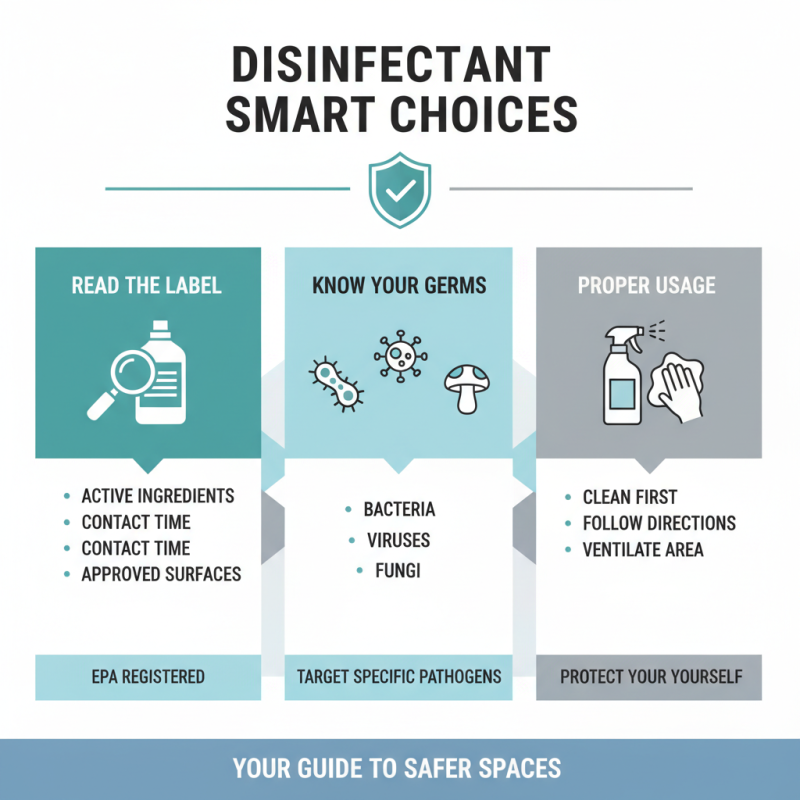
Choosing the right disinfectant involves understanding proper usage and application. Start by reading labels carefully. Different products have diverse active ingredients. Some might be effective against bacteria but not viruses. Knowing the specific pathogens you want to eliminate is crucial.
Tips: Always use disinfectants in a well-ventilated area. This enhances safety and effectiveness. Mixing different products can create harmful fumes. Avoid this by sticking to one product at a time. Also, never wipe the surface right after applying. Allowing the disinfectant to sit ensures better pathogen reduction.
Remember to prioritize high-touch areas like doorknobs, countertops, and light switches. However, it’s easy to overlook smaller, frequently touched items such as remote controls and phones. Rethink your routine to include these often-neglected surfaces. Take the time to re-evaluate your cleaning habits; staying vigilant leads to better protection against germs. Choose wisely and apply correctly for maximum effectiveness.
Comparing Brand Effectiveness and Consumer Reviews for 2026
Selecting the right disinfectant is crucial in 2026. An industry report shows that over 70% of consumers prioritize effectiveness when choosing these products. However, assessing effectiveness is not straightforward. Different pathogens require different formulations for optimal results.
Consumer reviews provide insights but can be misleading. A study indicates that 30% of users rate products based on personal preference rather than scientific evidence. This gap creates confusion. Some users favor fragrance over efficacy. Others assume a higher price means better performance, which is not always true. It’s essential to investigate ingredients and claims.
Many disinfectants boast quick kill times, but not all live up to their promises. Analyzing lab test results and checking for EPA registration can offer clarity. Users often overlook these details. They also neglect to consider environmental impacts. As sustainability becomes a priority, more eco-friendly options are emerging. Balancing effectiveness and safety will guide consumers toward informed choices.