The Best Livestock Disinfectant Options for 2026?
The livestock industry faces increasing challenges in maintaining health standards. According to the CDC, outbreaks of zoonotic diseases are on the rise. The need for effective livestock disinfectants has never been more critical. Recent reports indicate that farm biosecurity impacts animal health and productivity significantly.
Livestock disinfectants play a vital role in preventing disease spread. In 2025, the global disinfectant market for livestock is projected to reach $2.1 billion. However, many producers still overlook the importance of choosing the right disinfectant. Misunderstandings about effectiveness can hinder proper application, leading to unsafe environments.
Choosing the best livestock disinfectant requires careful consideration. The industry lacks uniform guidelines on application methods. Many products are available, but not all meet user needs. Some formulations can be too harsh for certain surfaces or animal species. This highlights the need for research and reflection on current practices. The future of livestock health relies on well-informed choices in disinfectants.

The Importance of Livestock Disinfection in Animal Health
Disinfection plays a pivotal role in maintaining livestock health. Effective disinfection reduces the risk of disease outbreaks in farms. When pathogens thrive, they can lead to significant losses. Healthy animals are essential for sustainable farming. Regular disinfection can lower infection rates and promote animal welfare.
Farm environments can be challenging to manage. Moisture and organic matter can harbor germs. This makes it crucial to choose the right disinfectant. Effective options penetrate surfaces deeply. It’s not enough to just spray; thorough cleaning is required first. The timing of disinfection matters too. Implementing routines can be hard but necessary.
Farmers must also consider the impact on animals. Some disinfectants can cause stress or irritation. It's important to ensure the chosen products are safe. Regular training on disinfection protocols can mitigate risks. Ultimately, a proactive approach can lead to better animal health and productivity. Disinfection isn’t just a task; it’s an essential practice that demands attention and care.
Types of Disinfectants Used in Livestock Farming
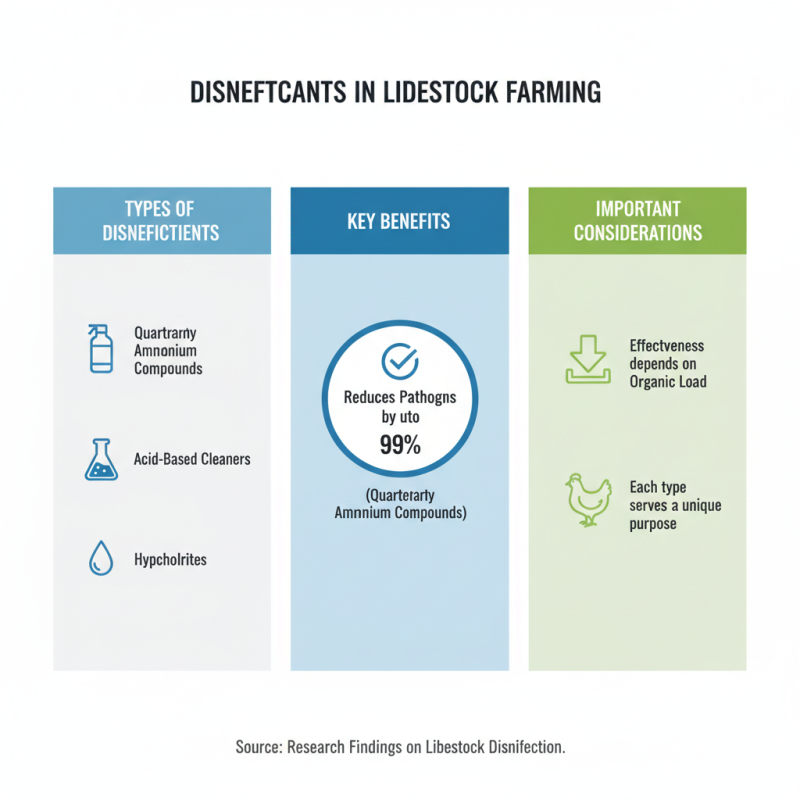
Disinfectants play a crucial role in livestock farming. Various types exist, and each serves a unique purpose. Common types include quaternary ammonium compounds, acid-based cleaners, and hypochlorites. Research indicates that quaternary ammonium compounds can reduce pathogens by up to 99% in certain conditions. However, their effectiveness often depends on the organic load present.
Acid-based cleaners are popular in removing biofilms. They can be effective against bacteria and viruses that thrive in livestock environments. Studies reveal that these cleaners can significantly minimize the risks of disease outbreaks. Nonetheless, improper use may still leave residues that harm animal health.
Hypochlorites provide a strong disinfecting effect. They can eliminate a wide range of pathogens. Yet, the harsh nature means they must be used carefully. A recent report noted that improper dilutions could lead to harmful side effects. Regular assessment of disinfectant efficacy is vital. Farming operations may find it challenging to maintain the right standards often. These factors underscore the need for ongoing education in selecting and using disinfectants effectively.
Criteria for Choosing the Best Disinfectant for Livestock
Choosing the right disinfectant for livestock is crucial. Livestock facilities carry unique challenges. Pathogens can thrive in these environments, leading to health issues in animals. A report by the Animal Health Organization highlights that 75% of livestock diseases are contagious and can spread rapidly.
Consider the effectiveness spectrum of the disinfectant. Different pathogens require varied action levels. For example, some disinfectants are excellent against bacteria but may lack efficacy against certain viruses. This gap can leave animals exposed to infections. Focus on broad-spectrum agents that cover a wide range of pathogens.
Safety is another key factor. Disinfectants should be safe for animals and the environment. Toxic ingredients can pose risks to both livestock and farm workers. According to the Veterinary Disinfectants Association, 30% of livestock facilities have reported adverse reactions from using harsh chemicals. This is a clear indicator that safety standards must be a priority for selection. Each option should be evaluated carefully, balancing effectiveness and safety to protect the health of livestock and workers alike.
Top Disinfectant Products for Livestock in 2026
In 2026, livestock farm management hinges on effective disinfectants. Having the right disinfectant can safeguard animal health. A good product should eliminate pathogens efficiently. Look for ones that are easy to use and have broad spectrum activity.
When choosing a disinfectant, consider its safety for animals. Some strong products may irritate skin or mucous membranes. Cost matters too, but don't compromise on quality. High-quality disinfectants often save money long-term by minimizing disease outbreaks.
Tips: Always test a small area first before full application. Ventilation is crucial when using strong chemicals. Regular cleaning of surfaces enhances disinfection effectiveness. A clean barn is the first line of defense. Make these steps part of your routine to maintain a healthy environment for your livestock.
The Best Livestock Disinfectant Options for 2026
| Disinfectant Type |
Active Ingredients |
Application Method |
Dilution Ratio |
Contact Time |
| Broad Spectrum Disinfectant |
Quaternary Ammonium Compounds |
Spray |
1:256 |
10 minutes |
| Hydrogen Peroxide Solution |
Hydrogen Peroxide |
Foam |
1:10 |
30 minutes |
| Iodine-Based Disinfectant |
Iodophor |
Soak |
1:100 |
5 minutes |
| Acid-Based Disinfectant |
Organic Acids |
Spray |
1:20 |
15 minutes |
| Phenolic Disinfectant |
Phenol Derivatives |
Mop |
1:30 |
20 minutes |