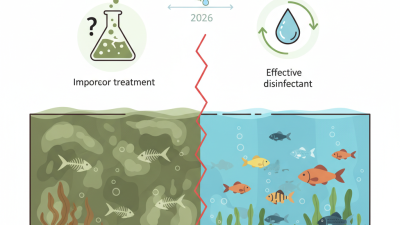
In the aquaculture industry, the health of fish and shellfish is paramount. Diseases can devastate entire stocks, leading to significant economic losses. According to the Food and Agriculture Organization (FAO), fish farming contributes over $250 billion annually to the global economy. To protect these investments, using an effective disinfectant for aquaculture is crucial.
Recent studies highlight that pathogen outbreaks can reduce yields by 30% or more if not managed properly. Effective disinfectants can significantly lower the risk of these outbreaks. For example, certain chemical agents can target bacteria and viruses responsible for diseases like vibriosis and motile Aeromonas septicemia. Selecting the right disinfectant ensures a healthier aquatic environment, impacting overall productivity.
However, not every solution is foolproof. Many disinfectants can harm aquatic life if misapplied. Inaccurate dosage and environmental impact are critical factors to consider. Therefore, aquaculture professionals must remain informed about the latest products and practices. With the right disinfectant for aquaculture, not only can farmers prevent losses, but they can also promote sustainable practices.
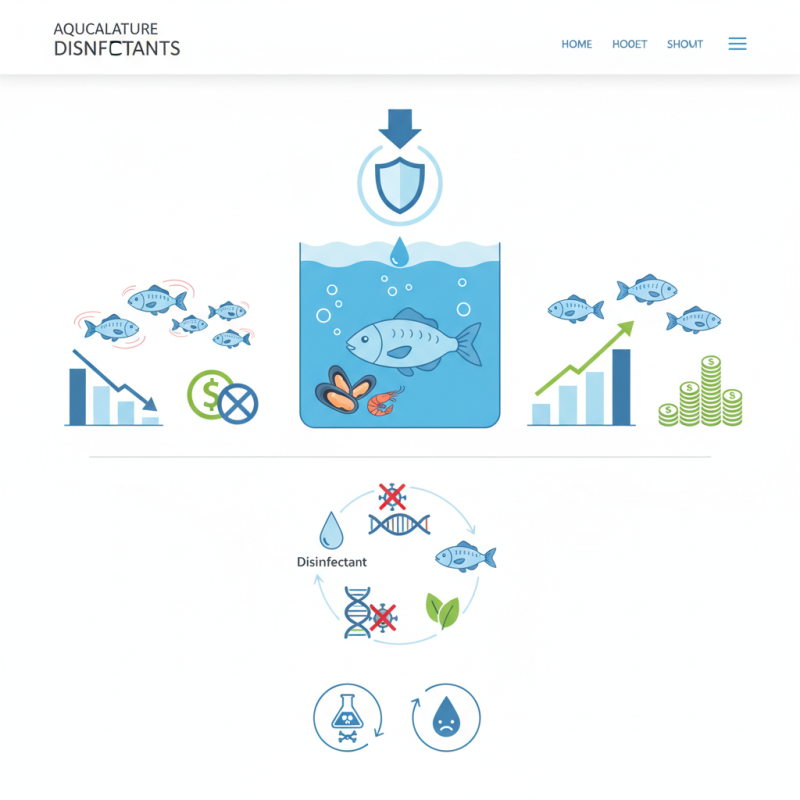
In aquaculture, choosing the right disinfectants is crucial for maintaining a healthy environment. Pathogens can spread quickly in aquatic systems, so effective disinfection is vital. When selecting a disinfectant, consider its efficacy against specific pathogens that might affect your aquaculture species. Some disinfectants target bacteria, while others can effectively eliminate viruses and fungi.
Another key factor is environmental impact. Some chemicals may harm aquatic life if they enter the water. Understanding the toxicity levels is essential. Look for products that are effective but also safe for the ecosystem. The application method is equally important. Some disinfectants require specific contact times to be effective, which can be challenging in busy operations.
Effectiveness and safety are not always straightforward. It's essential to regularly assess the performance of your chosen disinfectant. You might find that certain products perform differently based on water conditions or species. Reflection on past outcomes can guide future decisions. Balancing efficacy, safety, and operational needs is a continuous process that requires diligence and flexibility.
| Disinfectant Type | Active Ingredient | Application Method | Effectiveness (Time) | Safety Level |
|---|---|---|---|---|
| Quaternary Ammonium Compounds | Benzalkonium Chloride | Spray or soak | 10 minutes | Low toxicity |
| Chlorine Compounds | Sodium Hypochlorite | Dip or spray | 30 seconds | Moderate toxicity |
| Peracetic Acid | Peracetic Acid | Soak | 1-5 minutes | Low toxicity |
| Hydrogen Peroxide | Hydrogen Peroxide | Spray or soak | 10-15 minutes | Low toxicity |
| Iodophors | Iodine | Soak or spray | 10 minutes | Moderate toxicity |
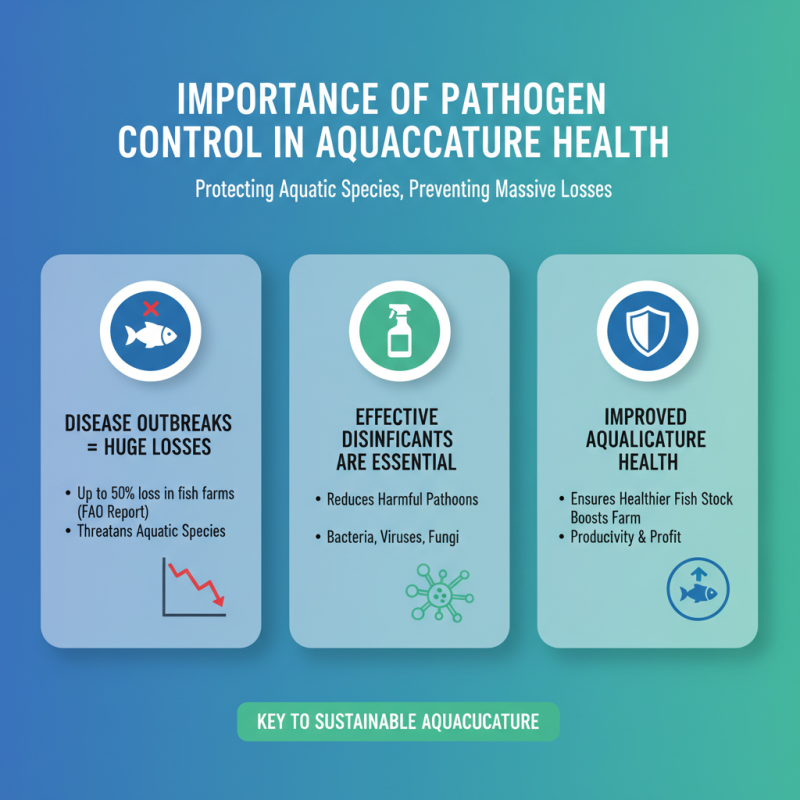
Pathogen control is crucial in aquaculture health management. A recent report from the Food and Agriculture Organization highlights that disease outbreaks can lead to losses of up to 50% in fish farms. This means that effective disinfectants are essential. They help in reducing harmful bacteria, viruses, and fungi that threaten aquatic species.
Studies indicate that regular use of appropriate disinfectants can significantly enhance overall fish health. For example, a 2021 research paper found that maintaining pathogen levels under control improved survival rates by 30%. Yet, many farms still overlook regular sanitation practices. This gap poses a risk to production efficiency and market stability. Ensuring biosecurity measures are in place is not optional; it is necessary.
Farmers often face challenges in selecting the best disinfectant. Many available options have varying effectiveness and some may even harm the aquatic environment. Awareness of these products is vital. Training staff on proper application is equally important. The complexity of pathogen management requires consistent evaluation and adaptation in practices to ensure the health of aquaculture systems.
In aquaculture, controlling pathogens is crucial for maintaining healthy aquatic environments. Selecting the right disinfectant can significantly impact the well-being of aquatic organisms. Various types of disinfectants exist, each exhibiting different levels of efficacy against harmful pathogens.
Chlorine-based disinfectants are popular due to their broad-spectrum efficacy. They work effectively against bacteria and viruses but can also have detrimental effects on aquatic life if not used carefully. Another common choice is hydrogen peroxide. It decomposes quickly, minimizing environmental impact, but its effectiveness may depend on water temperature and organic load.
Tips: Always test the disinfectant in a small area first. Monitor the reaction closely to prevent any adverse effects. Additionally, consider using environmentally friendly options where possible. Over-reliance on harsh chemicals can lead to resistant pathogens.
Ineffective application methods can compromise even the best disinfectants. Ensure coverage is uniform to maximize efficacy. Regular training for staff can enhance understanding and proper usage. The right approach not only protects aquatic life but also promotes a sustainable aquaculture practice.
In aquaculture, maintaining high sanitation standards is crucial. The health of fish and shrimp heavily relies on effective disinfection. According to the FAO, about 40% of global fish production now comes from aquaculture. This rapid growth has led to increased disease incidences, making effective disinfection vital.
Industry standards recommend selecting disinfectants based on their efficacy against specific pathogens. A study by the USDA found that certain disinfectants reduce pathogen load by over 90% in aquaculture systems. This efficacy is essential in preventing disease outbreaks. Regulations often require testing disinfectants under controlled conditions to assess their performance. These measures ensure that they are safe for aquatic life.
Furthermore, many aquaculture facilities struggle with compliance due to a lack of awareness about proper disinfection protocols. This gap poses a risk to both the environment and economic stability. Assessing the right course of action is necessary. While high standards exist, implementation can be inconsistent across the industry. Disinfection is not just about choice; it’s also about knowledge and adherence to guidelines.
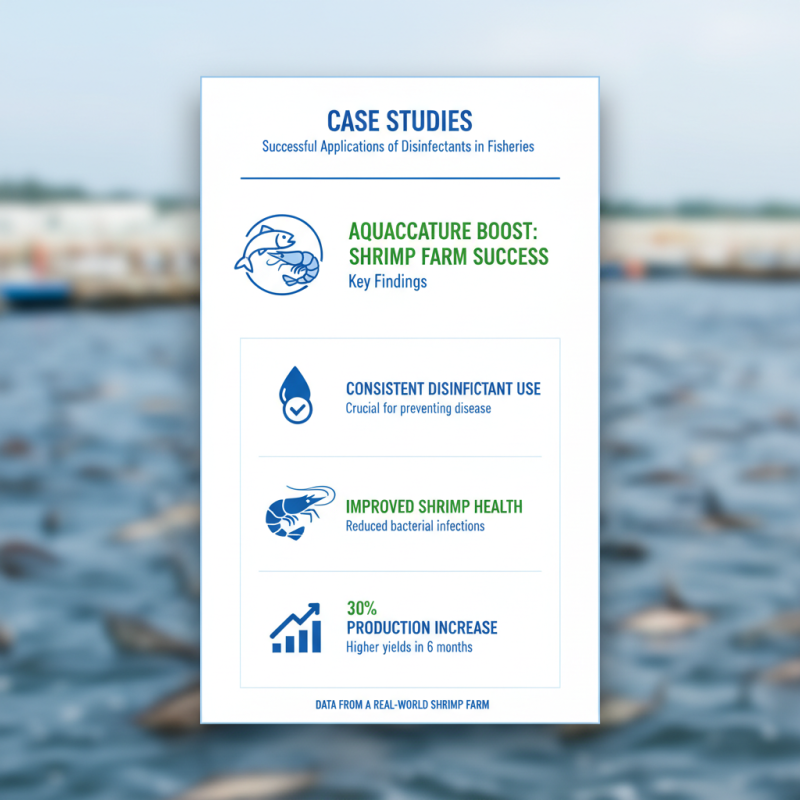
In aquaculture, the use of effective disinfectants is crucial. Successful case studies highlight various applications in fisheries. One notable instance involved a shrimp farm where consistent use of disinfectants led to a significant reduction in bacterial infections. The farm reported improved shrimp health and higher yields as a direct result. Data collected showed a 30% increase in production over six months.
Another example featured a fish hatchery struggling with viral outbreaks. The facility implemented a rigorous disinfection protocol. They observed a marked decrease in disease incidence. However, the hatchery's staff realized that over-reliance on chemical agents can lead to resistance. They now focus on integrating biological controls alongside disinfectants for a more sustainable approach.
Effective disinfectant application requires careful consideration. Each facility is unique, and what works in one may not work in another. It is essential to monitor the results closely and adapt strategies as needed. Continuous improvement is key, as complacency can lead to setbacks. These case studies provide valuable insights but also emphasize the need for ongoing evaluation and adaptation in aquaculture practices.