Top 5 Benefits of Potassium Monopersulfate Compound in Water Treatment
The use of potassium monopersulfate compound in water treatment has garnered significant attention among industry experts for its effective capabilities in enhancing water quality and safety. Dr. Emily Hartman, a leading researcher in environmental chemistry, emphasizes the advantages of this compound by stating, “Potassium monopersulfate is a game changer in the realm of water treatment, offering a powerful solution for oxidizing and disinfecting water without the harmful byproducts associated with traditional methods.”
As water quality becomes increasingly critical in both municipal and industrial applications, the exploration of alternative treatment methods has led to the recognition of potassium monopersulfate compound as a sustainable option. Its benefits are multilayered, ranging from its effectiveness as an oxidizing agent to its low environmental impact. This compound not only improves the microbiological safety of water but also plays a crucial role in chemical oxidation processes, enabling the removal of various contaminants.
In the following sections, we will delve deeper into the top five benefits of potassium monopersulfate compound in water treatment. By understanding its multidimensional advantages, stakeholders in the water treatment industry can make informed decisions that enhance both efficiency and sustainability in their operations.

Understanding Potassium Monopersulfate: Overview and Composition
Potassium Monopersulfate, often abbreviated as PMS, is a powerful oxidizing agent widely used in water treatment applications. This compound consists of potassium, sulfate, and peroxymonosulfate ions, making it an effective and versatile treatment option. Its unique three-part composition allows PMS to act as both a disinfectant and an oxidizer, helping to break down organic contaminants and reduce pollutants in water systems.
In water treatment processes, Potassium Monopersulfate is favored for its non-chlorine properties, which prevents the formation of harmful disinfection byproducts. This compound effectively manages algae, bacteria, and other microorganisms while improving overall water clarity. Additionally, PMS is compatible with various water treatment methods, enhancing oxidation reactions and facilitating the removal of unwanted particles.
**Tip:** When using Potassium Monopersulfate in water treatment, it is essential to monitor water chemistry regularly. This ensures optimal dosing and effective treatment results.
Another significant advantage of PMS is its stability in both acidic and alkaline conditions, making it suitable for diverse applications. Its efficiency is not hindered by pH fluctuations, which often challenge other treatment methods. This characteristic allows operators to maintain effective disinfection and oxidation continuously.
**Tip:** To maximize the effectiveness of Potassium Monopersulfate, consider conducting periodic system assessments to fine-tune application rates and to adapt to changing water quality conditions.
Key Mechanisms of Action in Water Treatment Processes
Potassium monopersulfate (PMS) has gained significant attention in the field of water treatment due to its effective disinfecting properties and versatile applications. One key mechanism of action lies in its ability to release active oxygen, which effectively inactivates pathogenic microorganisms. According to a study published in the *Journal of Environmental Engineering*, PMS has been shown to reduce microbial load by up to 99% in various water sources, highlighting its efficacy as a powerful oxidizing agent. This broad-spectrum antimicrobial action is particularly beneficial in treating recreational waters and municipal wastewater, where pathogen control is critical for public health.
Another important mechanism by which PMS operates is through its capacity to oxidize organic contaminants, enhancing water quality and safety. Research conducted by the American Water Works Association indicates that PMS can degrade phenolic compounds and other harmful pollutants commonly found in industrial effluents. The oxidation process not only transforms these contaminants into less harmful substances but also facilitates the removal of residual chlorine and other disinfectants, thus improving overall water clarity and taste. With these mechanisms, potassium monopersulfate proves to be an essential compound in modern water treatment protocols, offering both effective disinfection and contaminant reduction to support cleaner water systems.
Advantages over Traditional Water Treatment Chemicals
Potassium monopersulfate compound, known for its effectiveness in water treatment, presents several advantages over traditional water treatment chemicals. One notable benefit is its superior oxidation potential. According to a report from the American Water Works Association, potassium monopersulfate demonstrates a higher oxidation efficiency compared to chlorine and other common disinfectants. This characteristic not only enhances the removal of organic contaminants and pathogens but also reduces the formation of harmful by-products, which are often associated with conventional chlorination processes.
Another significant advantage of potassium monopersulfate is its stability and ease of use. Unlike traditional water treatment chemicals that may require precise handling and storage conditions, potassium monopersulfate remains effective over a wider range of pH levels and temperatures. The Water Environment Federation reports that this stability allows for a more consistent application in variable water sources, making it an attractive option for municipalities and industrial plants alike. Furthermore, its non-corrosive nature leads to longer equipment life and reduced maintenance costs, adding to the overall efficiency of water treatment systems.
Top 5 Benefits of Potassium Monopersulfate in Water Treatment
Environmental Impact: Safety and Degradability
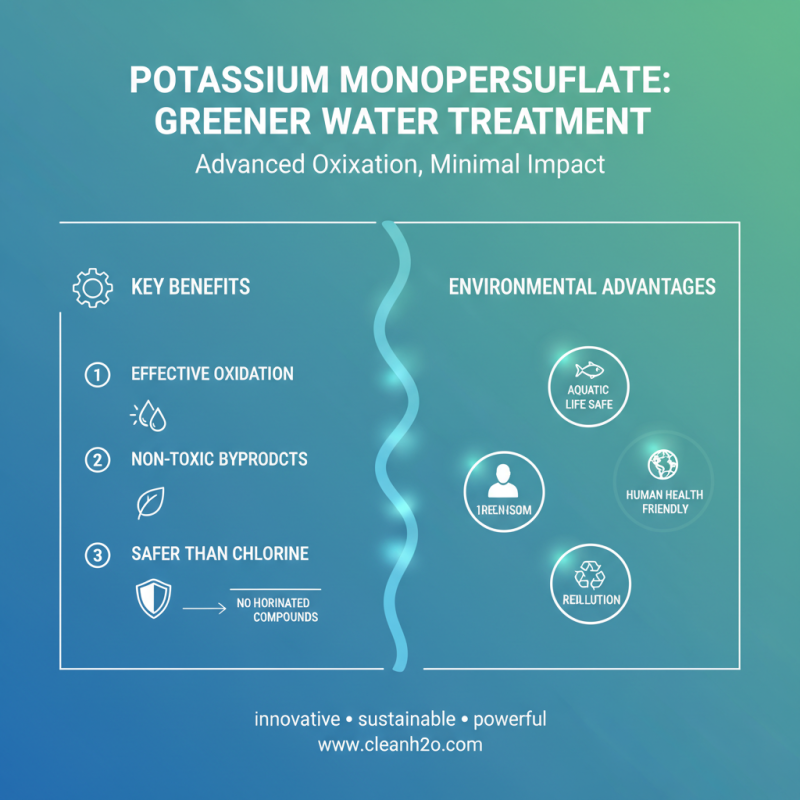
Potassium monopersulfate is gaining attention in the water treatment industry not only for its effective oxidation capabilities but also for its minimal environmental impact. When used in treatment processes, this compound breaks down into non-toxic byproducts, which significantly reduces concerns over environmental pollution. Unlike traditional chlorine-based disinfectants, potassium monopersulfate does not produce harmful chlorinated byproducts, making it a safer alternative for both aquatic life and human health.
Additionally, the degradability of potassium monopersulfate is a significant advantage in environmental management. Once utilized in water treatment, it decomposes efficiently, ensuring that no persistent residues remain to contaminate water sources. This characteristic supports sustainable practices in water management, allowing for cleaner water cycles and preserving ecosystem integrity. As societies strive for greener solutions, the use of potassium monopersulfate exemplifies a balance between effective water treatment and environmental responsibility.
Applications in Various Water Treatment Scenarios
Potassium monopersulfate, a powerful oxidizing agent, has become increasingly popular in various water treatment scenarios due to its effectiveness and versatility. One of its primary applications is in swimming pool sanitation, where it serves as a non-chlorine shock treatment. This compound helps in oxidizing organic contaminants and chloramines, thereby improving water clarity and hygiene. Its rapid action ensures a safe and welcoming swimming environment, making it a preferred choice for pool maintenance.
Beyond recreational water facilities, potassium monopersulfate is also utilized in drinking water treatment. It aids in the removal of taste and odor-causing compounds, enhancing the sensory quality of potable water. Moreover, its ability to break down harmful contaminants makes it suitable for mixing with filtration systems to ensure that the water meets health and safety regulations. The reduced formation of disinfection byproducts compared to traditional chlorine methods is an added advantage, promoting a cleaner and safer drinking water supply for communities.
In industrial water treatment, potassium monopersulfate is often employed in the treatment of wastewater. This compound effectively oxidizes pollutants, enabling smoother processing and compliance with environmental standards. Its use not only improves the efficiency of wastewater treatment plants but also enhances the ecological safety of discharged water. As awareness of sustainable practices increases, potassium monopersulfate remains a key player in the evolution of effective water treatment solutions across various sectors.
Top 5 Benefits of Potassium Monopersulfate Compound in Water Treatment - Applications in Various Water Treatment Scenarios
| Benefit |
Description |
Application Scenarios |
Effectiveness |
| Effective Oxidant |
Highly effective in breaking down organic contaminants. |
Municipal wastewater treatment plants. |
High |
| Reduced Chlorine Usage |
Helps in minimizing the amount of chlorine used for disinfection. |
Swimming pools and recreational water facilities. |
Moderate |
| Non-Staining |
Does not leave stains in water treatment systems. |
Industrial water treatment and cooling towers. |
High |
| Broad Spectrum |
Effective against a variety of pathogens and contaminants. |
Drinking water purification. |
Very High |
| Easy Handling |
Convenient to use compared to other oxidants. |
Residential water treatment systems. |
Moderate |